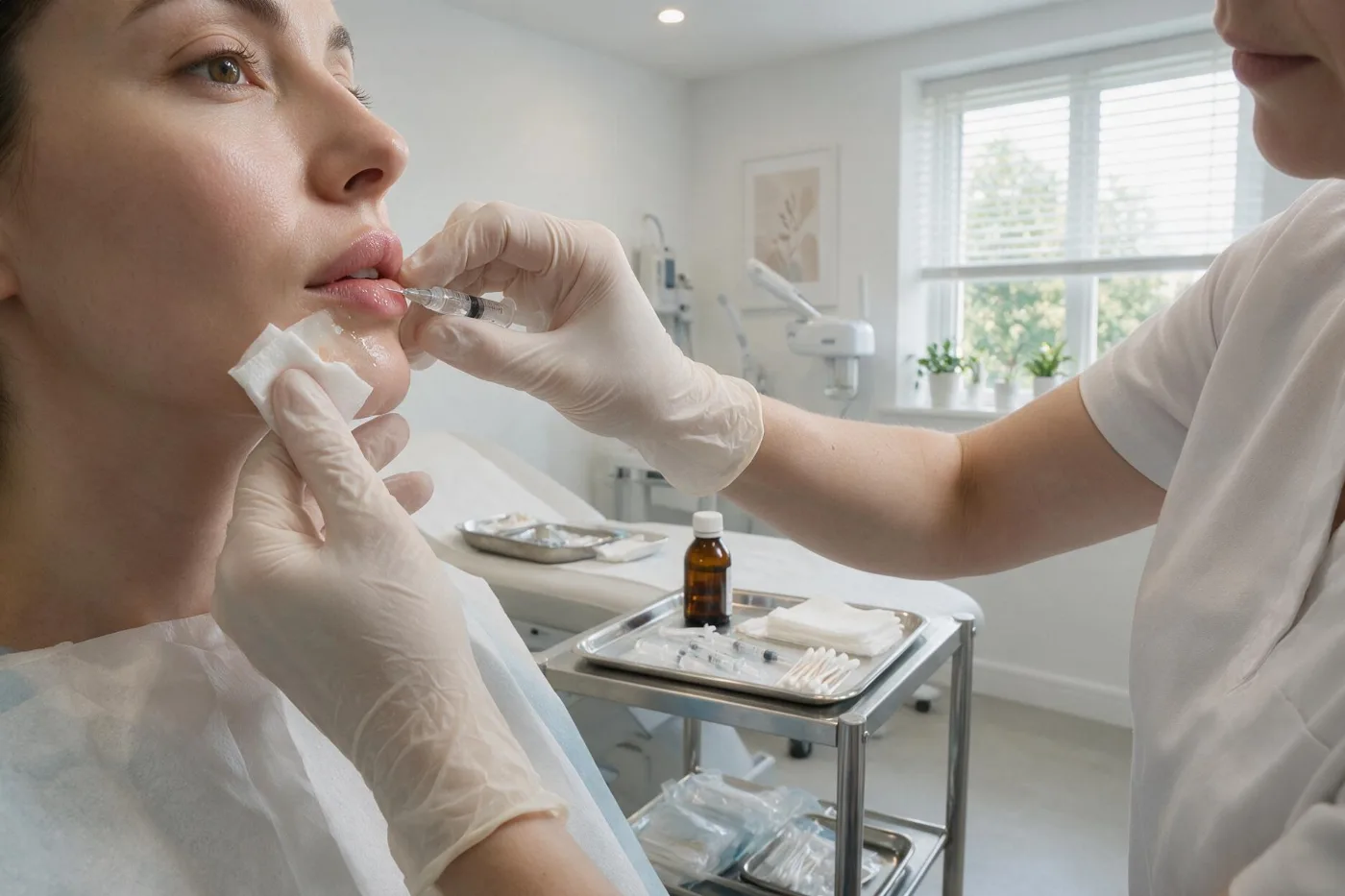
Fillers do not permanently stretch out your skin when they are placed correctly by a trained provider. Hyaluronic acid filler adds volume, and if you eventually stop, your skin returns close to your original baseline rather than sagging further because you once had it. The fear is common, but it does not match how healthy skin and modest, well-placed filler actually behave. At Vamped Aesthetics, we walk every patient through this before we mention specific treatments. If you want to talk through your own skin and goals, call (407) 412-8265 or book a consultation and we will start with an honest assessment.
Do fillers permanently stretch your skin?
No. Properly placed dermal filler does not damage the structural support of your skin or leave it loose once it wears off. Hyaluronic acid filler sits in a specific layer, adds cushion, and gradually breaks down over months. Nothing about that process pulls on your collagen or elastin fibers in a way that leaves permanent slack. What actually happens is simpler than the myth suggests. If you stop getting filler after a year or two, your skin does not stay stretched around a void. It settles back down toward the same baseline you had before you started, adjusted for whatever aging happened in the meantime anyway. The volume was never a permanent structure your skin built itself around, it was a temporary support you can choose to keep or let fade. This is one of the most common questions we hear before someone tries filler for the first time, and it is a fair one. Nobody wants to trade a temporary concern for a lasting problem. The honest answer is that filler, used at a reasonable dose and placed by someone who understands your anatomy, is designed to come and go without leaving your skin worse off than before.
Where does the "filler ruined my skin" idea come from?
That fear almost always traces back to two things happening at once, overfilling and normal aging, not to the filler itself. When someone has been given far more volume than their face actually needs, and then stops, what they notice is a mix of the excess volume leaving and the natural loss of elasticity and tone that happens with age anyway. It looks dramatic, and people blame filler as a category. When someone has been overfilled for a few years and finally stops, the lost volume and the years of quiet aging underneath become visible together. It can look like the skin was stretched out, but the filler was covering an aging process rather than causing one. This is why the provider matters as much as the product. Overfilling is a technique problem, not a filler problem. When a patient receives an appropriate, conservative amount of filler that matches their own anatomy, this pattern does not happen the same way, because there is never enough excess volume sitting there to reveal a dramatic before and after.
How much filler is too much?
Too much filler is whatever amount goes beyond what your face actually needs to look like a refreshed version of yourself. For some patients that is very little. For others, a modest amount in the right spots makes a real difference. There is no universal number of syringes that applies to everyone, and treating filler like a subscription you renew on a schedule is where problems start. Not everybody needs five syringes of lip filler every year, and honestly, most people do not need anywhere close to that. The trend of very large, obviously filled lips and cheeks is fading, and for good reason, it rarely holds up over time and it rarely looks natural. We would rather lean on biostimulators like Sculptra, which encourage your own body to build collagen, alongside genuine skin health, than keep adding filler on top of filler. Filler has a real place in a treatment plan. It is useful when there is an actual volume loss to address, and it can be part of a smart, phased approach. The question we ask before every syringe is whether it is solving something real for that specific patient, or just adding volume because more feels like more. Usually, less is the better answer.
How do we keep filler looking natural?
We keep results natural by starting with a full face assessment instead of treating one area in isolation. Your cheeks, jawline, lips, and under eyes all work together, and a plan that only looks at one spot tends to create the very imbalance that reads as overfilled. We look at your whole face first, then decide what, if anything, needs support. Just as important is being willing to say no. If a patient asks for more filler than their anatomy calls for, we will tell them that honestly rather than simply doing what is requested. That is the difference between looking like a rested version of yourself and looking like you visited an injector. We treat patients across Orlando, Maitland, and Dr. Phillips who want the first outcome, not the second. If you have been putting off filler because you are worried about the long term look, that worry usually points to a provider problem, not a filler problem. Talk with us before you decide either way. Call (407) 412-8265 or reach out to book a consultation, and we will figure out together whether filler makes sense for you, and if so, how much.