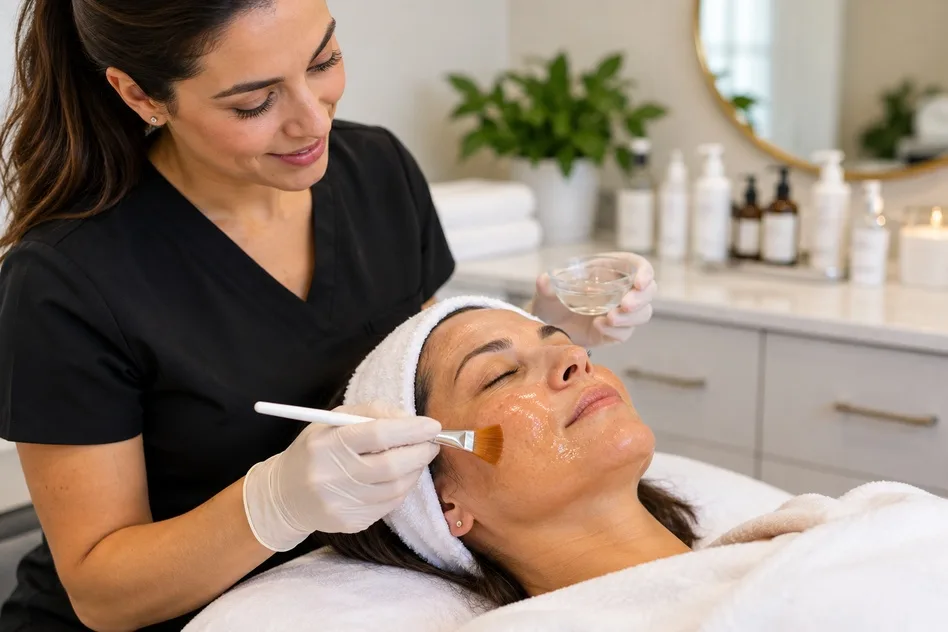
A planned series of chemical peels fades sun damage and melasma gradually and safely, lifting pigment a layer at a time while giving your skin time to recover between visits. Paired with a consistent home routine and daily sunscreen, a series typically produces more even, longer lasting results than one aggressive peel, and with less risk of irritation that can make pigment worse.
If you have spent years covering brown spots with makeup, you are not alone. Florida sun is relentless, and pigment is one of the most common concerns we see. At Vamped Aesthetics, our nurse practitioner builds every peel plan around your skin, not a one-size protocol. To see what a series could do for you, book a consultation with us at (407) 412-8265.
Why does a series of chemical peels work better than one peel?
A series works better because pigment sits in layers, and each peel safely reaches only so far. Several treatments spaced weeks apart fade discoloration step by step while your skin heals in between, which keeps the process controlled.
It is tempting to want everything gone in one visit. But a single strong peel can inflame the skin, and inflammation is one of the things that triggers more pigment, especially with melasma. A measured series works with your skin's natural turnover instead of fighting it. Each session loosens and lifts pigment a little more, and your skin settles before the next one.
Life in Dr Phillips makes this approach especially practical. Between patio dinners along Sand Lake Road and weekend rounds at Bay Hill, our patients spend a lot of time in the sun. A series lets us adjust each treatment based on how your skin responded to the last one and what your schedule looks like. Our chemical peel plans are built around that flexibility.
Which peel depth is right for melasma versus general sun damage?
Melasma usually calls for gentle, superficial peels because it is easily triggered by heat and inflammation. Sun spots and general sun damage can often handle a slightly stronger approach. Your consultation determines the right depth for your skin type and history.
Sun damage, such as freckling and brown spots on the cheeks, forehead, and chest, comes from cumulative UV exposure. It often responds well to a series of superficial to light peels, sometimes progressing in strength as the skin tolerates it. Melasma is different. It is influenced by hormones, heat, and light, and it can flare if the skin is pushed too hard. That is why we keep melasma peels gentle and steady.
We worked with a Dr Phillips patient who asked for a strong peel before a school reunion. She had been covering her melasma with makeup and was tired of seeing it rub off on every white collar. Instead of risking a flare, we set her up with a measured series and paired it with a sensible home routine. Skin tone and past reactions also matter, so we review your history carefully before choosing any peel.
How long does it take for chemical peels to fade pigment?
Most patients notice brighter, more even skin after the first few peels, with more visible fading as the series continues over several months. Melasma tends to fade more slowly and benefits from ongoing maintenance.
Peels in a series are usually spaced a few weeks apart, giving the skin time to shed and recover. Light flaking or tightness for a few days afterward is common with many peels. Results build gradually, so it helps to take photos in the same light before your first session and partway through. Many people are surprised by the change when they compare.
Timing around your calendar matters. If you have an event coming up, plan the series so the final peel is not right before it. Summer in Central Florida also brings more intense sun, so some patients prefer to begin a series in the cooler months and keep up maintenance through the rest of the year. Realistic expectations make the process far more satisfying.
How do we protect chemical peel results with home skincare and sunscreen?
Daily broad-spectrum sunscreen is the most important part of protecting your results, along with a gentle home routine that supports healing and helps keep pigment from returning between and after peels.
Pigment fades with treatment, but sun exposure can bring it right back. We recommend a broad-spectrum mineral sunscreen every morning, reapplied when you are outdoors, plus a wide-brimmed hat for long stretches outside. After a peel, gentle cleansers and moisturizers help the skin recover. Once your skin is ready, we may recommend targeted products that support an even tone. Our skin care guidance keeps your routine simple and matched to your peel plan, so you are never guessing which products to use.
Ready to finally fade the spots you have been covering up? Call Vamped Aesthetics at (407) 412-8265, or schedule your chemical peels consultation, and we will create a plan that brings out clearer, more even skin.